Bedding · Materials & Care
How Adjustable Wool Fill Shapes the Feel of an Obasan Pillow
A pillow is a modest piece of engineering that spends the night under the most particular part of the body. Its height, firmness, and ability to give way can matter more than its appearance. Obasan’s organic wool pillow offers a practical means of tuning those qualities: a zippered core lets the sleeper add or remove wool knops, while a two-sided cotton cover offers a small choice of surface feel.
Published November 9, 2026
There are objects in a bedroom that ask for attention, and objects that quietly determine the terms of the night. A pillow belongs to the second group. It is easy to think of one as a fixed thing—soft, firm, high, low—until a change in sleeping position, a sore neck, or a new mattress makes its proportions suddenly conspicuous. Then the pillow is no longer background. It is a small landscape that needs to be altered.
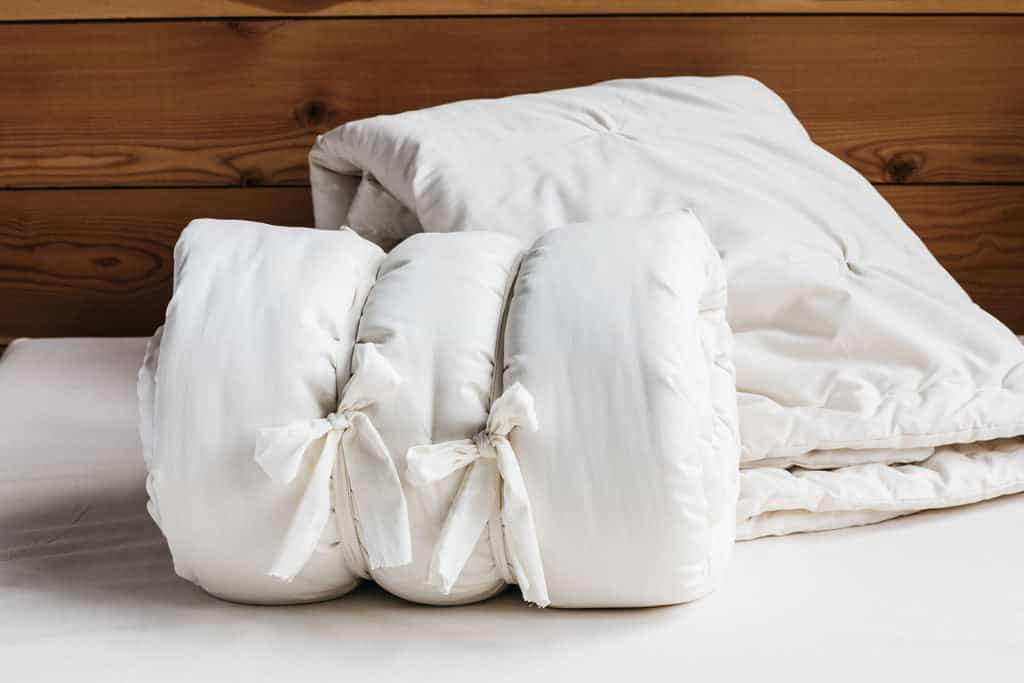
An adjustable wool pillow approaches that problem with an uncommon degree of literalness. Instead of asking the sleeper to accept a predetermined loft, it allows some of the filling to be removed or returned. In the Obasan organic wool pillow, the filling is described as wool knops: small clusters of wool that create loft and give the interior a less uniform character than a single, tightly packed mass. A zipper opens the pillow core, making the fill accessible for adjustment.
The idea is simple, though the experience is not merely mechanical. A pillow’s feel comes from several things acting together: the amount and arrangement of its fill, the way that fill compresses beneath the head, the fabric enclosing it, and the sleeper’s own habits. Changing the quantity of wool can alter height and cushioning, but the result is best understood through patient trial rather than a dramatic one-time transformation.
What pillow loft actually means
Loft is the height a pillow maintains when it is resting under the head. In everyday conversation, people often use “loft” as shorthand for thickness, but thickness alone does not describe the whole experience. A lofty pillow can compress substantially once weight is applied; a lower pillow can feel supportive if its filling resists collapse. The relevant question is not simply how tall the pillow looks on the bed, but how much height remains when the head and neck settle into it.
That distinction helps explain why pillow shopping can be so vexing. A pillow that seems generous in a showroom may feel too high at home. Another may look spare but provide a stable, comfortable cradle. Sleeping position matters, as do shoulder width, mattress softness, and the extent to which a person moves during the night. A side sleeper, for instance, may need more space filled between the ear and mattress than someone who sleeps on their back. Stomach sleepers often prefer a lower profile, although comfort is individual and no single formula can settle the matter.
Adjustable fill gives the sleeper a way to make incremental changes. Removing wool generally lowers the pillow and may make it feel less full. Adding wool can increase height and give the surface more resistance, provided the pillow has room to accommodate it without becoming crowded. The adjustment is not a clinical prescription or a guarantee of perfect alignment. It is a useful means of bringing the pillow closer to a person’s preferences, then observing how the neck and shoulders respond over several nights.
Wool knops: small clusters, different behavior
Wool knops are clusters of wool used as filling. Their form is important because pillow fill is not simply a matter of fiber quantity. The filling must also move, compress, and recover in a way that feels agreeable. In a pillow made with wool clusters, the interior is composed of many small units rather than one continuous sheet of batting. That construction can make the fill easier to redistribute and, in an adjustable design, easier to remove in manageable amounts.
Wool itself has a springy quality. Individual fibers can bend and recover, contributing to resilience rather than the flat, immediate collapse associated with some softer fills. Wool also interacts with moisture and warmth differently from many synthetic materials: it can absorb moisture vapor into the fiber while continuing to feel comparatively dry at the surface. These are material characteristics, not promises that a pillow will solve overheating, sweating, or sleep problems. The room, bedding, body, and season all remain part of the equation.
In practical terms, wool knops can create a soft but structured feel. They are not necessarily a dense, solid block, and they should not be expected to behave like a molded foam contour. A sleeper may notice that the fill shifts slightly as the pillow is handled, or that its surface responds with a gentle, resilient give. How pronounced that impression is depends on the amount of fill, the cover, and the individual pillow’s construction.
The word “organic” describes a sourcing or production standard, not a particular sensation. It does not, by itself, tell a buyer how firm a pillow will feel, how much support it will provide, or whether it is suitable for a specific sleeper. Those questions are better approached through construction details and use. For the Obasan pillow, the central practical feature is adjustability: the filling can be accessed through the zippered core, so the sleeper can change the pillow’s volume rather than treating its initial loft as permanent.
The two-sided cotton cover
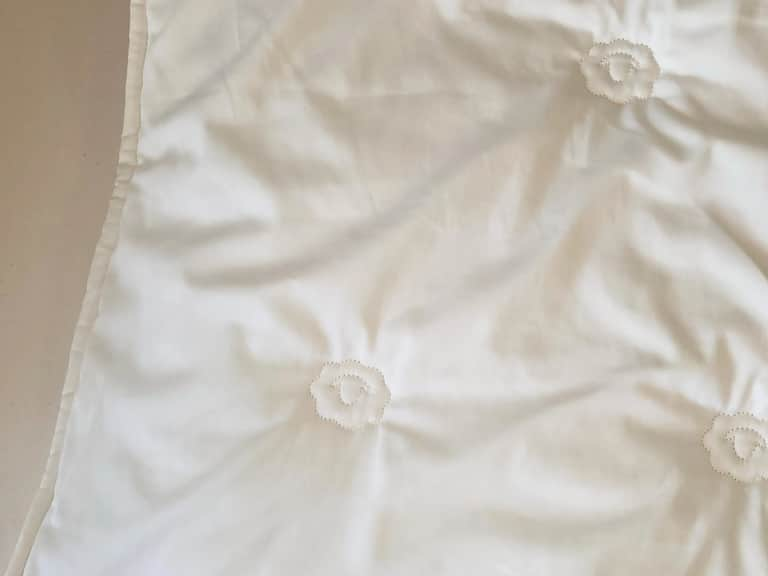
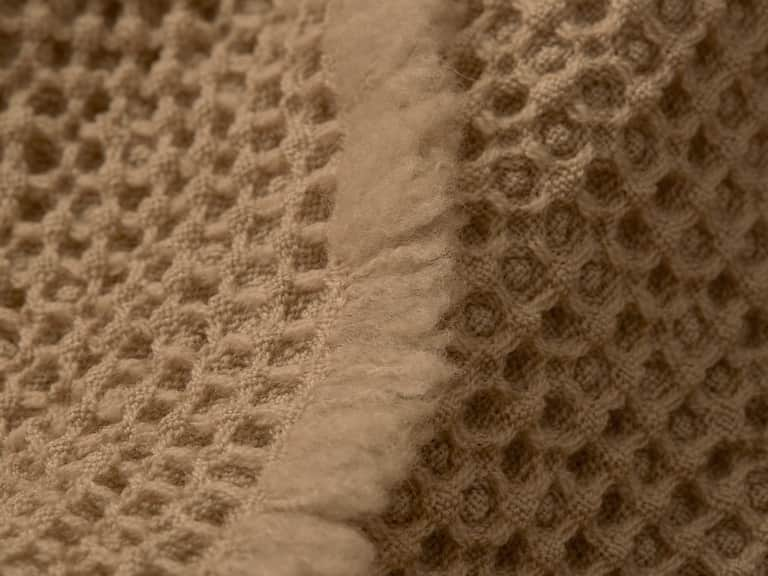
The cover is part of the pillow’s feel, not merely a wrapper. Obasan’s pillow is described as having silky organic cotton on one side and soft cotton jersey on the other. The difference between these fabrics is subtle but tangible. A smoother woven surface can feel cool and slick against the cheek; jersey, with its knitted structure, tends to feel more relaxed and supple. Turning the pillow over will not change its loft, but it can change the first impression of contact.
This is a modest choice, yet it acknowledges an often-overlooked fact about bedding: comfort begins at the surface. A sleeper may care about the tactile feel of a pillowcase, how easily fabric moves against the face, or whether a surface feels cool at first touch. The cover’s two sides let the user choose between different cotton textures without changing the internal filling. A pillowcase will, of course, sit between the face and the pillow cover in ordinary use, so the sensation will depend on that outer layer as well.
The cover and the fill also have different care needs. The pillowcase can generally be removed and laundered according to its own label, but the wool core should not be assumed to be washable just because another wool product is advertised as machine washable. The care guidance for this pillow says not to wash the wool core. That distinction is worth keeping clear: washable wool comforters, wool-filled pillows with washable shells, and wool-knop cores can each have different construction and care instructions.
How to adjust the fill without overcorrecting
The temptation, when a pillow feels wrong, is to make a large correction at once. With an adjustable wool pillow, a measured approach is more useful. Begin with the pillow as supplied and sleep on it for a few nights, unless the height is obviously uncomfortable. Notice whether the head feels pushed upward, whether it sinks too far, or whether the pillow seems comfortable at first but loses its support as the night goes on. Those observations are more informative than a vague verdict that it is “too soft” or “too firm.”
- Prepare a contained work area. Wool clusters are light and can scatter. Work over a clean surface, away from open windows or active fans. The product’s care guidance suggests adjusting the fill over a kitchen sink with the drain plug in place, or outside, to make loose wool easier to contain.
- Open the core carefully. Use the zipper to access the filling, and avoid pulling against the fabric or forcing the opening. Keep the removed wool in a clean, dry container so that it can be returned if needed.
- Make a small change. Remove a modest amount rather than emptying a large section of the core. Smooth and redistribute the remaining fill before closing the zipper. The aim is to alter the pillow’s height gradually, not to create an uneven hollow.
- Test it in your usual position. Lie down as you normally would, with the mattress and other bedding in their ordinary arrangement. A pillow can appear different in the hand than it feels beneath the head.
- Give the change time. Sleep on the adjusted pillow for several nights before making another revision. If it feels too low, return some of the reserved fill; if it feels too high, remove a little more.
There is no universal quantity to remove. The right amount depends on the sleeper and the pillow’s starting fill. Nor is it necessary to pursue a theoretically perfect alignment by repeatedly dismantling the pillow. The goal is a comfortable, stable position that allows the head and neck to rest without persistent pressure or strain. If discomfort continues, or if pain is significant, a pillow adjustment should not substitute for appropriate medical advice.
Why small changes are easier to judge
Sleep is a poor laboratory for instant conclusions. A person may wake feeling different because of stress, room temperature, a late meal, a change in schedule, or the mattress itself. A single night with a new pillow setting can therefore be misleading. Adjusting in stages reduces the number of variables and makes it easier to tell whether a change in loft is helping.
It can be useful to make a brief note after waking: the sleeping position that felt most natural, whether the pillow seemed too high or too low, and whether there was any unusual pressure at the neck or shoulder. This need not become a spreadsheet. A few plain observations over several nights can prevent the familiar cycle of removing too much fill, adding it all back, and wondering whether anything has changed.
People who share a bed may also discover that comfort is individual even when the bedroom is not. One sleeper may want a deeper, more yielding pillow; another may prefer a lower one. Adjustable fill is useful precisely because it allows a pillow’s volume to be altered for one person’s preferences rather than imposing a standardized feel. It does not make the pillow infinitely customizable: the core, cover, and filling still have limits. But it offers more room for adjustment than a fixed-fill design.
Care: protect the core, refresh the surface
Wool is often praised for its resilience and odor resistance, but those qualities are not a reason to neglect basic care. A pillowcase helps protect the cover from body oils, perspiration, and everyday dust. Laundering that case regularly is the simplest routine. Follow the manufacturer’s directions for the removable cotton cover, if it is designed to be removed, and do not assume that its instructions apply to the wool filling.
For the Obasan wool core, the guidance is explicit: do not wash it. Instead, cover the pillow, air it seasonally, and address odors with care. The product information suggests sprinkling baking soda to help eliminate odors. If using it, apply it to the appropriate surface, let it sit, and remove it thoroughly before putting the pillow back into use. Avoid soaking the wool or exposing it to harsh cleaning agents. Moisture trapped in a dense filling can take time to dry, and rough treatment may compromise the fill’s loft or structure.
Some wool pillows can be refreshed in a dryer on an air or very cool setting, but care instructions vary. The Obasan pillow’s supplied guidance mentions using two tennis balls on an air or coolest setting to increase loft. Because appliance settings differ, and because the wool core should not be washed, it is sensible to use the gentlest available setting and stop if the pillow becomes warm. When in doubt, follow the current care label or the maker’s guidance rather than borrowing instructions from a different wool product.
Seasonal airing is a low-effort habit. Place the pillow in a dry, well-ventilated area, out of damp conditions. Fresh air can help it feel less enclosed after regular use. Direct, prolonged exposure to intense sun is not necessary; heat and ultraviolet exposure can affect textiles over time. Keep the core dry, and return it to the cover only when it is fully aired.
Who may appreciate an adjustable wool pillow?
The design may appeal to sleepers who have struggled to find a fixed pillow height, or who want the option to revise a pillow after a change in mattress or sleeping habits. It may also suit someone who values natural fibers and is willing to follow more careful maintenance instructions than those of a conventional machine-washable pillow. The zippered core makes customization possible; the wool fill and cotton cover supply the material character.
It may be less convenient for someone who wants to put the entire pillow into a washing machine, or who prefers a precisely uniform, molded shape. An adjustable wool pillow asks for a little participation. The owner may need to redistribute the filling, make gradual changes, and protect the core from unnecessary moisture. That effort is not onerous, but it is part of the object’s nature.
Anyone with a wool sensitivity, a specific allergy concern, or a medical condition affecting sleep should consider their own circumstances before choosing a wool-filled pillow. General descriptions of a material cannot predict an individual reaction. Likewise, claims about temperature regulation or natural resistance should not be mistaken for medical benefits. They describe properties commonly associated with wool, not a guarantee of a particular health outcome.
A more personal kind of fit
The appeal of adjustable fill lies less in the promise of an ideal pillow than in the permission to make one’s own adjustments. A fixed pillow makes a quiet demand: adapt to me. A zippered core reverses the arrangement, allowing the sleeper to alter the object, a little at a time, until its height and cushioning feel more familiar. Wool knops make that possibility tangible because they can be added or removed rather than compressed into a permanent shape.
There is a certain old-fashioned practicality in the idea. Instead of replacing a pillow at the first sign of mismatch, the sleeper opens it, considers what is inside, and makes a small correction. The task is not glamorous. It involves a zipper, a clean work surface, and perhaps a container for the wool. But it draws attention to the way comfort is made: not by softness alone, but by proportion, material, and the fit between an object and the person using it.
For the Obasan organic wool pillow, the key is to treat adjustability as a process rather than a feature to be tested in a single afternoon. Begin with the original loft. Notice how it feels in bed. Change the fill conservatively, then allow several nights for judgment. Use the two-sided cotton cover according to the surface feel you prefer, keep the core dry, and follow its care instructions rather than assuming all wool bedding behaves alike.
A pillow will never know who is sleeping on it. It can, however, give a little ground, keep its shape, and be altered when the first arrangement proves not quite right. The luxury is not necessarily softness or abundance. Sometimes it is the simpler privilege of being able to take a little away.
Frequently asked questions
What does adjustable wool fill change?
Removing wool generally lowers the pillow and reduces its fullness; adding wool can raise the loft and make it feel more substantial. The exact result depends on how much fill is changed and how it is redistributed inside the core.
What are wool knops?
Wool knops are small clusters of wool used as pillow filling. In an adjustable pillow, they can be removed or added through the zippered core, allowing the sleeper to change the pillow’s volume.
Can the Obasan wool core be machine-washed?
The care guidance says not to wash the wool core. Protect it with a pillowcase, air it seasonally, and follow the specific instructions provided for the cover and filling.
Does turning the pillow over change its support?
No. The two-sided cotton cover changes the surface texture—a silky woven cotton on one side and soft cotton jersey on the other—but it does not change the amount of fill or the pillow’s loft.
How often should the fill be adjusted?
There is no fixed schedule. Adjust it when the pillow’s height or cushioning no longer feels suitable, and make changes gradually. Once the loft feels comfortable, there is no need to alter the filling simply for routine maintenance.